
Opening the Underwater World
Opening the World Beneath the Surface: How Unmanned Dynamics Is Revolutionizing Underwater Navigation
ENGINEERING SCIENCES
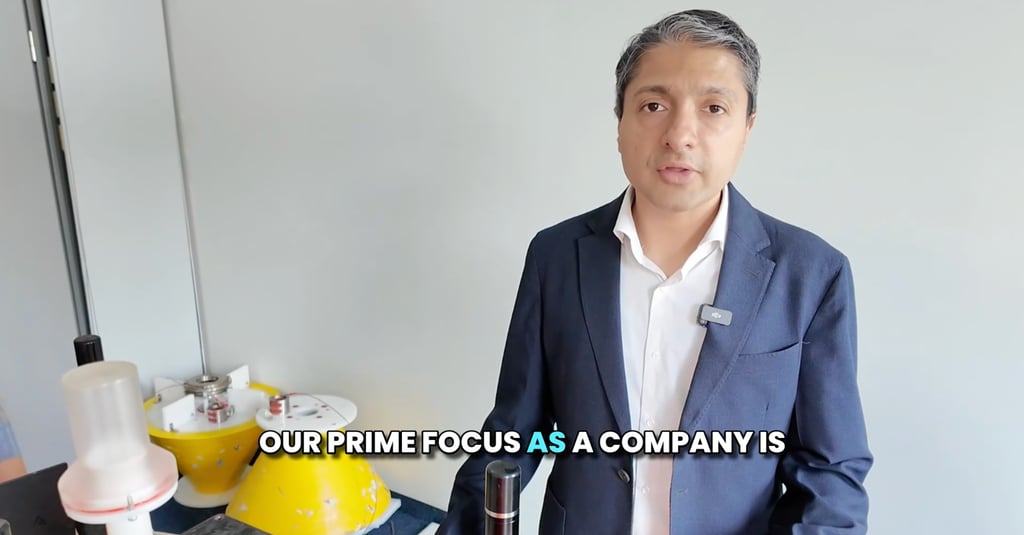
“GPS signals do not penetrate underwater.” That simple fact explains why autonomous underwater drones are still rare compared to aerial ones. But a Lithuanian startup, Unmanned Dynamics, is changing that.
Led by CEO Srinath Mallikarjunan, Unmanned Dynamics specializes in guidance, navigation, and control technologies — the core systems that make autonomous movement possible. The company’s latest innovation, Aquagrid, is a spin-off technology born from this expertise and designed to bring true autonomy to underwater vehicles.
🧭 The Challenge
While aerial drones rely on GPS for precise positioning, radio signals like GPS can’t travel through water. That makes it extremely difficult for underwater drones (AUVs) to determine where they are — a fundamental requirement for any autonomous system.
🌐 The Solution: Aquagrid
Aquagrid introduces a completely new approach. It uses Galileo satellite signals, which are retransmitted through acoustic modems — a communication method based on sound waves.
In other words, Aquagrid enables underwater drones to “talk” and navigate using sound, the same way whales and dolphins communicate.
⚙️ How It Works
The Aquagrid system consists of four or more buoys floating on the water’s surface.
Each buoy contains:
A GPS receiver on top
An acoustic modem below the surface
These modems communicate with an underwater vehicle — such as a submarine or AUV — which then computes its own position using advanced sensor fusion algorithms.
These algorithms were originally developed by Unmanned Dynamics for aerial drone navigation, and are now adapted to the underwater environment to calculate precise position, velocity, and orientation.
Before field testing in lakes or the sea, the team validates everything in their lab-based land test rig, ensuring both hardware and software function flawlessly.
🌊 Why It Matters
The potential applications are vast:
Oil & gas industries rely on underwater inspection and maintenance
Submarine cables and pipelines require regular monitoring
Marine research and environmental studies need reliable autonomous tools
Until now, these operations have depended on very expensive, complex underwater vehicles. Aquagrid’s system aims to make such vehicles easier to maintain, more accessible, and far more cost-effective.
🚀 The Vision
Srinath’s vision reaches far beyond a single product:
“My grand vision for the company is that we are a conglomerate which supplies drones from sea to space.”
With support from the ESA Business Incubation Centre (ESA BIC), Unmanned Dynamics is proving the potential of Aquagrid and pushing toward a future where underwater drones become as common and capable as aerial ones.
#UnderwaterDrones #Innovation #DeepTech #Lithuania #ESA #Startup #Autonomy #UnmannedDynamics #Aquagrid #OceanTechnology
